An honest, first-person account of a hapé (rapé) ceremony in the Antioquian jungle. The nerves before, the intensity during, the stillness after, and a clear-eyed look at what this Amazonian plant medicine is actually for.
I came to Cerro Tusa Springs to experience an environment much different from my own; I left thinking about a single, quiet hour with my eyes closed.
That hour was a hapé ceremony — my first — held in the jungle at the base of Cerro Tusa, the world’s largest natural pyramid. If you’ve seen the word hapé (also spelled rapé, pronounced “ha-peh”) drifting through wellness circles and wondered what it really is, what it feels like, and whether it’s for you, this is the unfiltered version.
First, what hapé actually is
Hapé is a sacred Amazonian snuff: a finely ground blend of mapacho — a potent wild jungle tobacco (Nicotiana rustica, far stronger than anything in a cigarette) — combined with the alkaline ashes of sacred trees like tsunu, and sometimes other medicinal plants. It has been used for generations by Indigenous peoples of the Amazon, including the Yawanawá, Huni Kuin, and Katukina, for grounding, prayer, focus, and energetic cleansing.
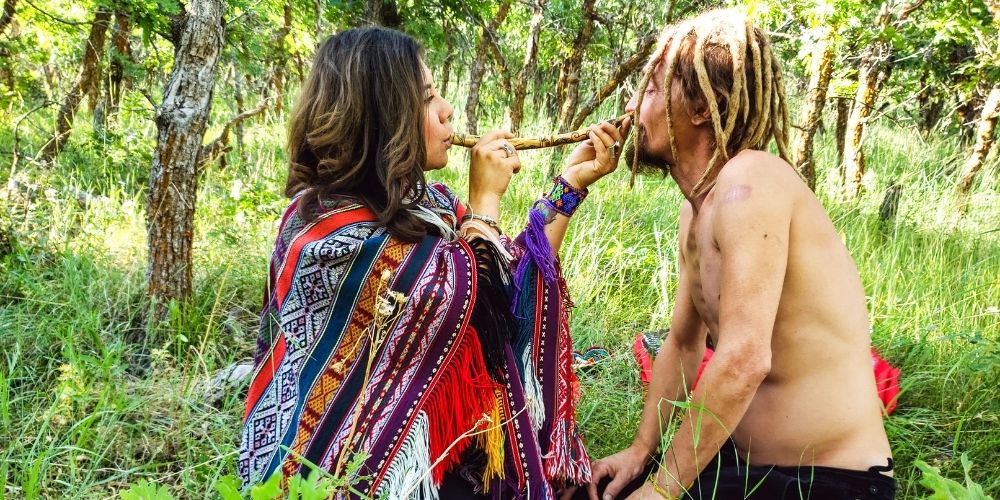
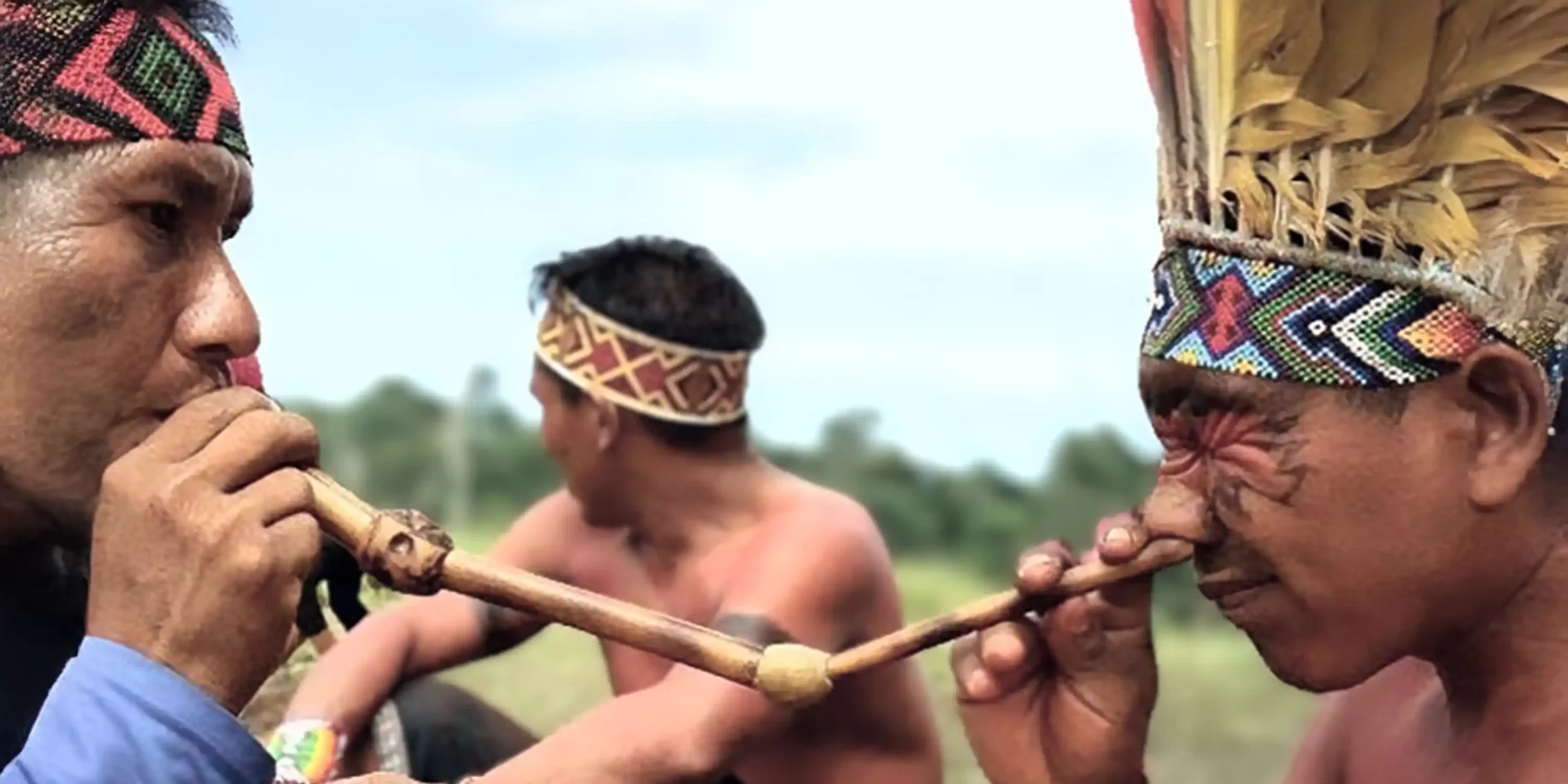
It’s administered through the nostrils with a pipe (a tepi when a facilitator serves you, a kuripe for self-application). One important thing to understand up front: hapé is not psychedelic. There are no visions, no hallucinations, no “trip.” What it offers is sharper, quieter, and more grounded than that. More on the distinction below.
Before: the nerves
I’ll be honest — I was nervous.
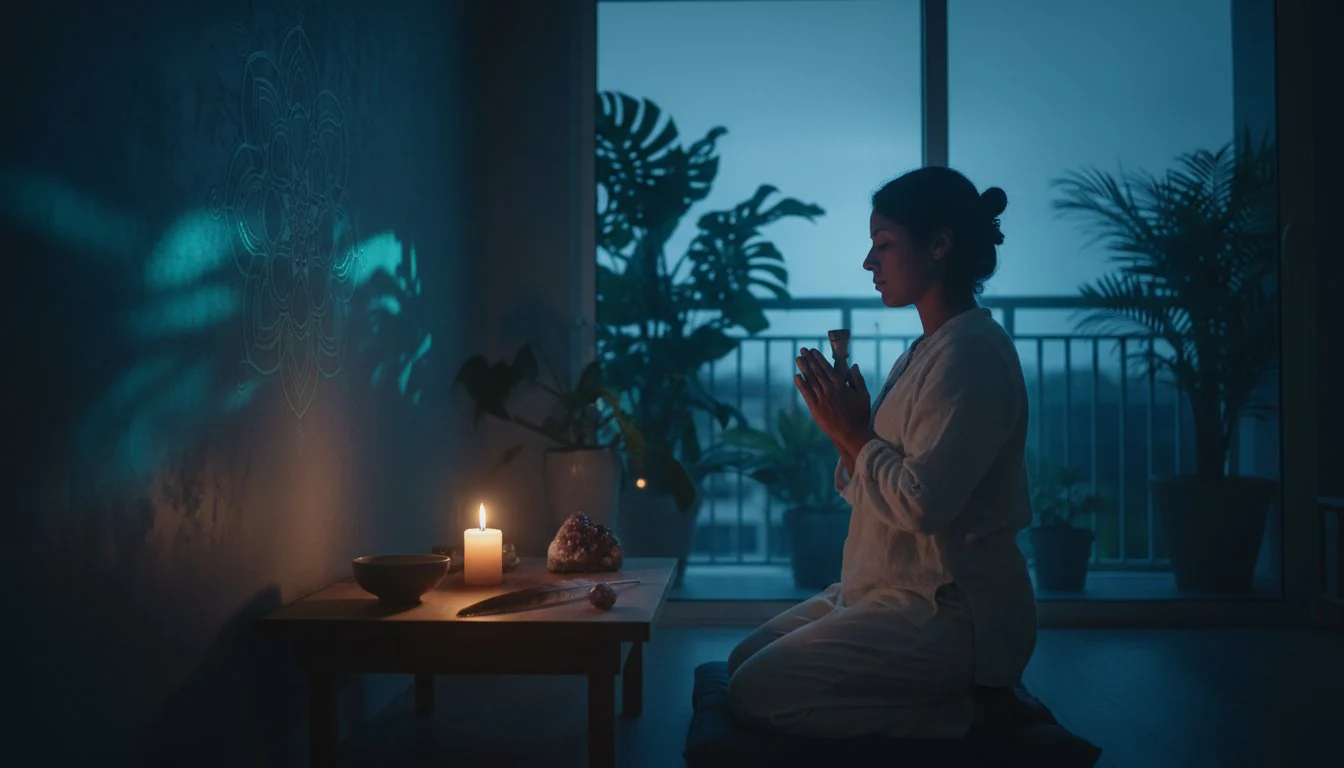
Everything I’d read described an intense physical sensation, and sitting cross-legged on a wooden platform with the rainforest humming around me, I felt the anticipation in my chest. The facilitator walked us through the intention-setting that opens any genuine ceremony: a few slow breaths, a candle, a moment to name silently what I wanted to release and what I wanted to make room for. That part surprised me. Before any medicine touched me, the ritual had already slowed me down. Everything got quieter — my to-do list, my phone, the noise I carry without noticing. The setting helped: birdsong, the smell of wet green earth, the pyramid somewhere above us in the cloud. I went in tense. I sat with the intention until I was merely curious.
During: the intensity, then the drop
Then the tepi.
The blow is forceful and fast, one nostril at a time, and the sensation arrives instantly. A hot, pressing rush moved up through my sinuses and into the crown of my head — sharp, heavy, impossible to think around. My eyes watered. There was a wave of heat, a thickness in my throat, the urge to do absolutely nothing but breathe.
For maybe ninety seconds it was a lot. The instinct is to tense up against it; the practice is to surrender to it. So I sat. I breathed low and slow, the way I’d been guided, and let the intensity peak and roll through me like weather.
And then, the drop. The pressure softened into a strange, spacious stillness. My racing mind went quiet in a way I rarely manage even in deep meditation. Not sleepy, not high. Awake and grounded at the same time. The acute physical part lasted ten or fifteen minutes; we sat in silence and let it settle. No one spoke. The jungle did the talking.
After: the stillness that stayed
When I finally opened my eyes, the light looked different — cleaner, somehow.
I felt emptied out in the best sense — lighter, clearer, oddly tender. I drank water. I didn’t reach for my phone. I walked one of the property’s jungle trails to a lookout, sat with the mountain, and let the calm keep working. That part is real and lasting: while the strong sensation fades quickly, the grounded clarity lingered for hours, into the next morning.
It wasn’t euphoria — it was something more useful: a reset. A sense of having put something down that I’d been carrying without realizing.
What hapé is for
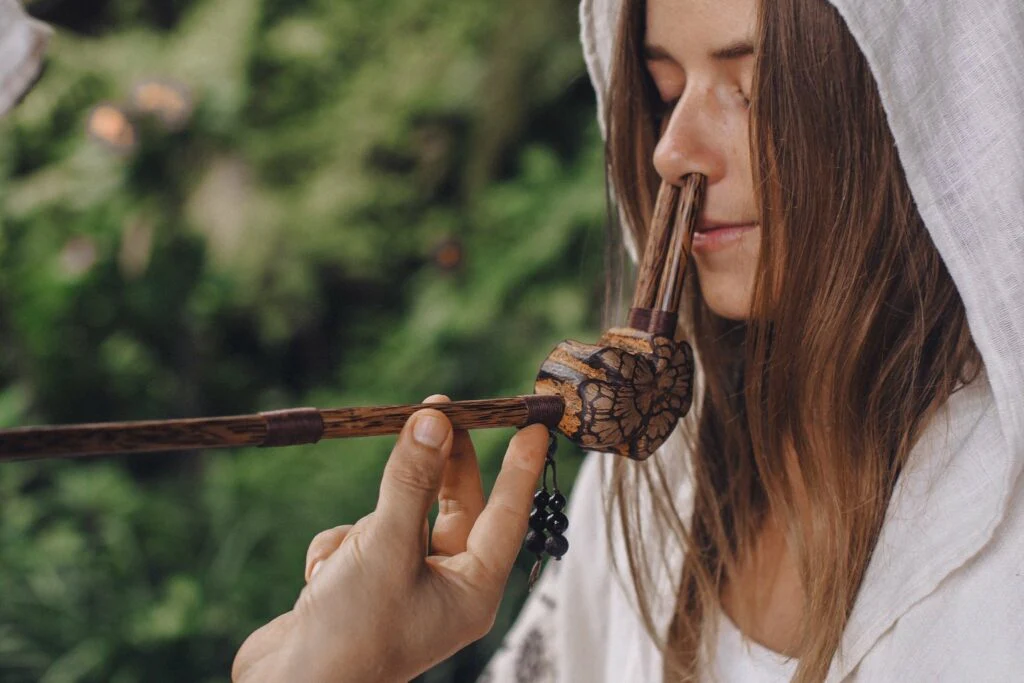
In its traditional and ceremonial context, hapé is used for:
- Grounding and presence — quieting mental noise and bringing you firmly into your body and the moment.
- Clarity and focus — many describe a “clean mind,” which is why it’s often used before meditation, prayer, or reflection.
- Energetic and emotional cleansing — a felt sense of releasing heaviness or stagnation.
- Intention and connection — deepening prayer, ceremony, and a relationship with nature and self.
These are lived, subjective experiences shared by practitioners, not allopathic medical guarantees.
What hapé is not for

This matters as much as the rest, so I’ll be direct:
- It is not a recreational drug or a party substance. It’s a sacred medicine that asks for respect, intention, and the right setting.
- It is not a psychedelic. No visions, no hallucinations. If you’re seeking an ayahuasca-style journey, this isn’t that.
- It is not a cure. Hapé is not a treatment for depression, anxiety, addiction, or any medical or mental-health condition, and it’s no substitute for professional care.
- It is not for everyone, or for casual self-experimentation. It contains potent tobacco and nicotine, the physical effects are strong, and it should be approached with a knowledgeable, respectful facilitator. If you’re pregnant, have heart or blood-pressure concerns, or other health conditions, it isn’t appropriate without proper guidance.
- It is not a souvenir to be stripped of its roots. This is sacred Indigenous Amazonian medicine. Receiving it well means honoring where it comes from and why it exists.
Why Cerro Tusa Springs was the right place for it
Context shapes everything in ceremony, and few settings hold space like this one. Cerro Tusa Springs is an eco-hotel folded into the Antioquian rainforest in Venecia, at the foot of a mountain the Zenufaná people held sacred for over two thousand years. Between the jungle trails, the natural pools, the sauna and stone baths, and the quiet, the whole property is built to help you slow down — which is exactly the state a hapé ceremony asks for. Sitting with ancestral medicine beneath an ancestral mountain didn’t feel like coincidence; it felt like providence.
This account describes a personal experience and is shared for informational purposes only. It is not medical advice. Hapé contains tobacco and nicotine and is not suitable for everyone; anyone considering a ceremony should consult a qualified healthcare provider and work only with a knowledgeable, respectful facilitator.